Pest Control Tips · Vista, CA
Are Roof Rats Dangerous? What Vista Homeowners Should Know
Scratching in the attic at night, droppings in the garage, oranges hollowed out on the tree. Roof rats are common across Vista and North San Diego County, where fruit trees, ivy, palms and dense landscaping give them food and cover. The question we hear most is whether they are actually dangerous or just a nuisance. The honest answer: they are a real health and property risk, and they are worth dealing with quickly.
Health Risks of Roof Rats
- Contaminated food and surfaces. Droppings and urine can spread bacteria such as salmonella, especially in pantries, garages and kitchens.
- Leptospirosis. This bacterial illness spreads through rat urine in water or soil and can affect people and dogs.
- Fleas and flea-borne typhus. Rats carry fleas, and flea-borne (murine) typhus cases are reported in Southern California each year.
- Rat-bite fever. Rare, but possible from bites or scratches, which is one reason never to handle a rat, live or dead.
- Allergens. Droppings, urine and nesting material in the attic can affect indoor air and people with allergies or asthma.
One common myth: hantavirus in California is linked mainly to deer mice, not roof rats. That does not make rat droppings safe, it just means the main concerns are the ones listed above.
Damage Roof Rats Cause
- Chewed electrical wiring in attics and walls, which is a fire risk
- Torn and flattened insulation soaked with urine and droppings
- Holes in AC ducts and chewed irrigation and water lines
- Fruit eaten on avocado, citrus and other backyard trees
- Gnawed holes in eaves, vents and garage doors that let more pests in
What Does a Roof Rat Look Like?
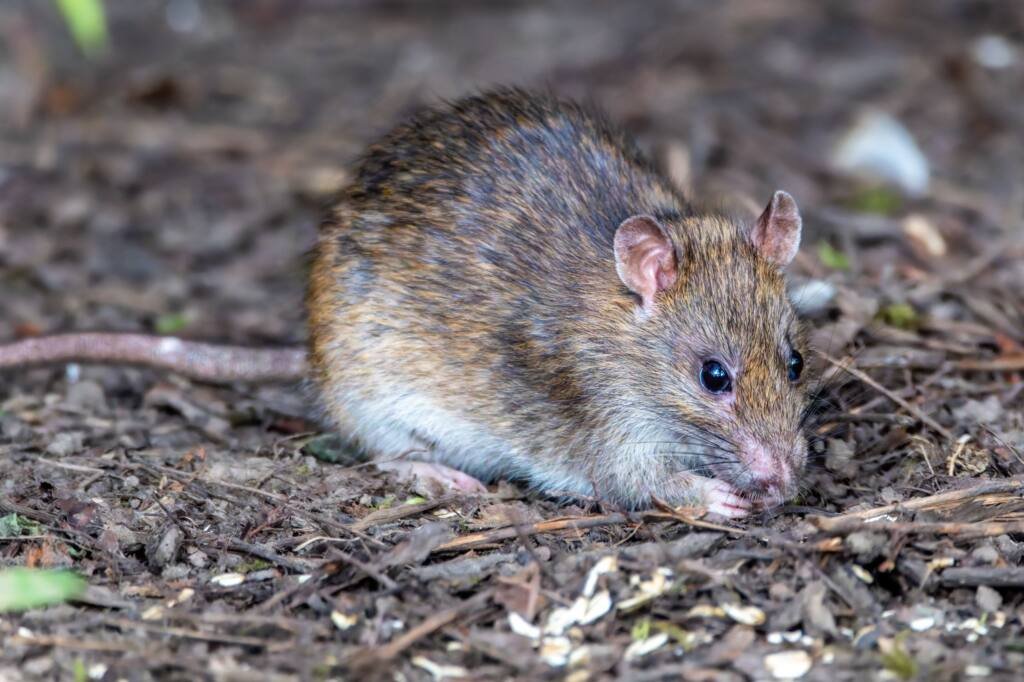
Roof rats are slender and agile, with dark brown to black fur, a pointed nose, large ears and a tail longer than the head and body together. An adult body is about 6 to 8 inches long, with a 7 to 10 inch tail. Norway rats are heavier, with a blunt nose, small ears and a shorter tail. For a full side-by-side, see Roof Rats vs. Norway Rats.
Signs Roof Rats Are in Your Home
- Scratching or running sounds in the attic or walls at night
- Droppings about half an inch long with pointed ends
- Greasy rub marks along beams, pipes and entry points
- Fruit hollowed out while still hanging on the tree
- Pets staring at walls or ceilings, or a musky smell in the attic
What to Do If You Have Roof Rats
- Don’t sweep or vacuum droppings dry. Wear gloves, spray droppings and nesting material with a disinfectant or diluted bleach, let it soak, then wipe it up.
- Keep food sealed. Store pet food, birdseed and pantry items in sealed containers and pick up fallen fruit.
- Trim back access routes. Cut tree branches, vines and ivy back from the roof and walls.
- Seal entry points. Rats can squeeze through gaps about half an inch wide at vents, eaves and pipe openings.
- Get professional help for attic infestations. Trapping, exclusion and cleanup together are what stop them coming back.
Our rodent control service in Vista covers inspection, trapping, sealing entry points and attic cleanup. For heavily damaged insulation, see attic restoration.
Frequently Asked Questions
Are roof rats dangerous to people?
They can be. Roof rats contaminate food and surfaces with droppings and urine, which can spread illnesses such as salmonella and leptospirosis, and their fleas can carry flea-borne typhus, which is reported in Southern California. They rarely bite unless handled or cornered.
Do roof rats carry hantavirus?
Hantavirus in California is mainly linked to deer mice, not roof rats. Rat droppings should still be cleaned up carefully because of the other germs they can carry.
How big is a roof rat?
An adult roof rat has a body of about 6 to 8 inches, plus a tail of about 7 to 10 inches that is longer than its head and body combined. Most weigh well under a pound.
Are roof rats dangerous to pets?
Dogs and cats can pick up fleas and germs from rats, and dogs can be exposed to leptospirosis. Rat baits are also a serious poisoning risk for pets, which is why bait placement matters.
Can roof rats cause a fire?
Yes, it is possible. Rats chew wiring in attics and walls, and damaged wires are a fire risk. Chewed wiring is one of the main reasons attic infestations should not be left alone.
Hearing scratching in the attic at night? Call us today for a rodent inspection and a plan to get them out and keep them out.