Termites don’t take a season off in Vista, CA — subterranean termites work year-round in our mild North San Diego County climate, while drywood termite swarms tend to spike after warm days following rain, especially in spring and fall. If you’ve spotted mud tubes along your foundation, discarded wings on a windowsill, or hollow-sounding wood trim, here’s what’s actually going on and what to do next.
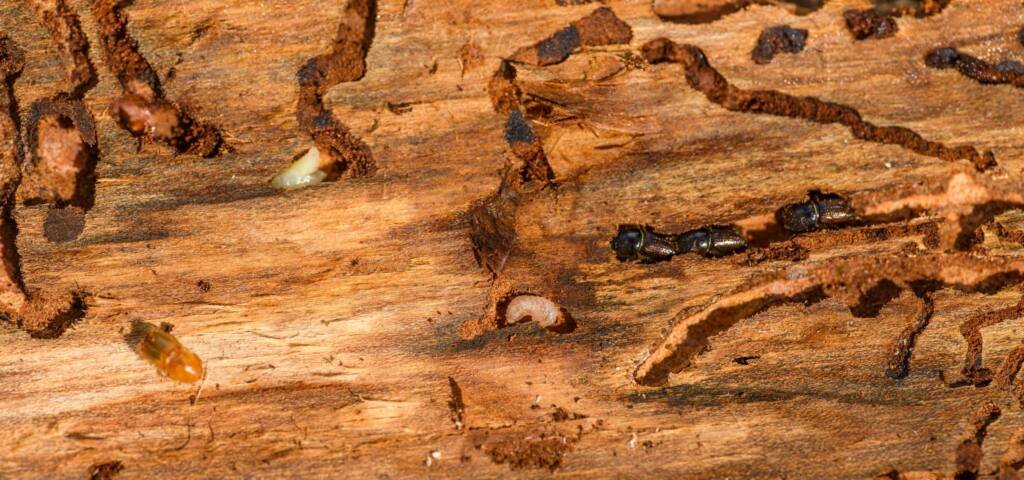
Is There a “Termite Season” in Vista, CA?
Not in the way colder climates experience one. Vista’s coastal-influenced climate stays mild enough that subterranean termite colonies remain active in the soil throughout the year. What homeowners notice as a “season” is really swarm timing: drywood termite alates (winged reproductives) tend to emerge on warm, still afternoons or evenings, often after a rain event breaks a dry spell — commonly in the spring and again in early fall here in San Diego County. Subterranean termite swarms follow a similar warm-and-humid trigger. A swarm in your yard doesn’t always mean your house is infested, but it does mean termites are active nearby and an inspection is worth scheduling.
Drywood Termites vs. Subterranean Termites in Vista Homes
Both species are common in our area, but they behave differently and call for different treatment approaches:
- Drywood termites live entirely inside the wood they eat — framing, attic beams, fascia boards, even furniture. They don’t need contact with soil, so you’ll often find them in second-story framing or roof structures. Signs include small, pellet-like frass (droppings) that looks like coarse sand piling up beneath a piece of wood, and “kick-out” holes where frass is expelled.
- Subterranean termites nest in the soil and build pencil-width mud tubes to travel from the ground into your home’s wood, staying hidden from open air. They’re typically found near foundations, slab edges, crawl spaces, and areas where soil contacts wood or stucco. Because their colonies can be large, they’re often responsible for more extensive structural damage if left untreated.
Because the two species nest and feed differently, an effective treatment plan starts with correctly identifying which one (or both) you’re dealing with — not a one-size-fits-all spray.
Signs You May Have a Termite Problem
- Mud tubes running up a foundation wall, pier, or crawl space support
- Discarded, uniform-length wings near windowsills, doors, or light fixtures after a swarm
- Wood that sounds hollow or papery when tapped, or that crumbles under light pressure
- Small piles of frass (drywood termite droppings) resembling fine sawdust or coffee grounds
- Tight-fitting doors or windows caused by warping as termites feed on surrounding wood
- Visible tunneling or galleries when a damaged board is opened up
Many of these signs are easy to miss during everyday life — they show up in crawl spaces, attics, and other spots homeowners rarely inspect closely. That’s the main reason termite damage is often more advanced than expected by the time it’s noticed.
Our Termite Inspection & Treatment Process
- Full inspection — We check the foundation perimeter, crawl space, attic, eaves, and any wood-to-soil contact points for mud tubes, frass, damaged wood, and live activity.
- Species identification — Confirming drywood vs. subterranean (or both) determines the right treatment method, since the two aren’t treated the same way.
- Treatment plan — Depending on the species and extent of activity, this may involve localized spot treatment, structural treatment, or soil treatment around the foundation.
- Written report — You receive a clear summary of what was found, what was treated, and any repair or monitoring recommendations.
- Follow-up monitoring — Termite activity is checked at agreed intervals to confirm the treatment is holding.
Termite Inspections for Real Estate (WDO Reports)
If you’re buying or selling a home in California, a Wood-Destroying Organism (WDO) inspection is commonly required as part of the transaction. This is a standardized report (the Structural Pest Control Board’s Official Report) that documents termite activity, damage, and other wood-destroying conditions found on the property at the time of inspection. If you’re in escrow on a Vista home and need a WDO report, we can schedule the inspection directly with your real estate agent or escrow office.
Serving Vista and Nearby Communities
We treat termites throughout Vista — Downtown Vista, Shadowridge, Buena Creek, and Rancho Buena Vista — across zip codes 92081, 92083, 92084, and 92085, as well as neighboring Oceanside, San Marcos, Carlsbad, and Escondido. Older homes near established tree cover and homes with wood fencing, patio covers, or direct wood-to-soil contact tend to see more termite activity locally.
Termite Control in Nearby Cities
We also provide termite inspections and treatment across North County. Each city page covers the local housing and the termites we see there: termite control in Oceanside, termite control in Carlsbad, termite control in Escondido and termite control in San Marcos. Wondering about winged bugs around your windows? Read termite swarmers vs. flying ants.
Outside Vista? We also have local pages for termite control in Fallbrook, Oceanside, San Marcos, Escondido and Carlsbad.
Frequently Asked Questions
Do I need to leave my home during termite treatment?
It depends on the treatment method. Localized spot treatments for drywood termites usually don’t require you to leave. Broader structural fumigation, if ever needed for a severe drywood infestation, does require the home to be vacated for a set period. We’ll tell you exactly what to expect before treatment begins.
Can I treat termites myself with store-bought products?
Over-the-counter sprays and foams can kill termites they directly contact, but they rarely reach an entire colony and can even make an infestation harder to treat by causing colonies to bud off (split) and spread. Because drywood and subterranean termites nest differently, professional identification of the species and extent of activity matters more than the specific product used.
Will termites come back after treatment?
Treated areas are protected against reinfestation for the period covered by your specific treatment, but termite pressure in the soil and surrounding trees never fully goes away in San Diego County. That’s why we recommend periodic monitoring, especially for homes with a prior history of activity.
How much does termite treatment cost?
Cost depends on the termite species, the size of the infested area, and whether treatment is localized or structural. We provide a written estimate after the inspection, before any work begins — there’s no guessing involved.
Think you have termites, or need a WDO inspection for a home sale in Vista? Call us today to schedule a full termite inspection.